Why the Kwara substation uses 330 kV, 132 kV and 33 kV
One facility, three voltage levels, three different jobs — and the transformers that connect them.
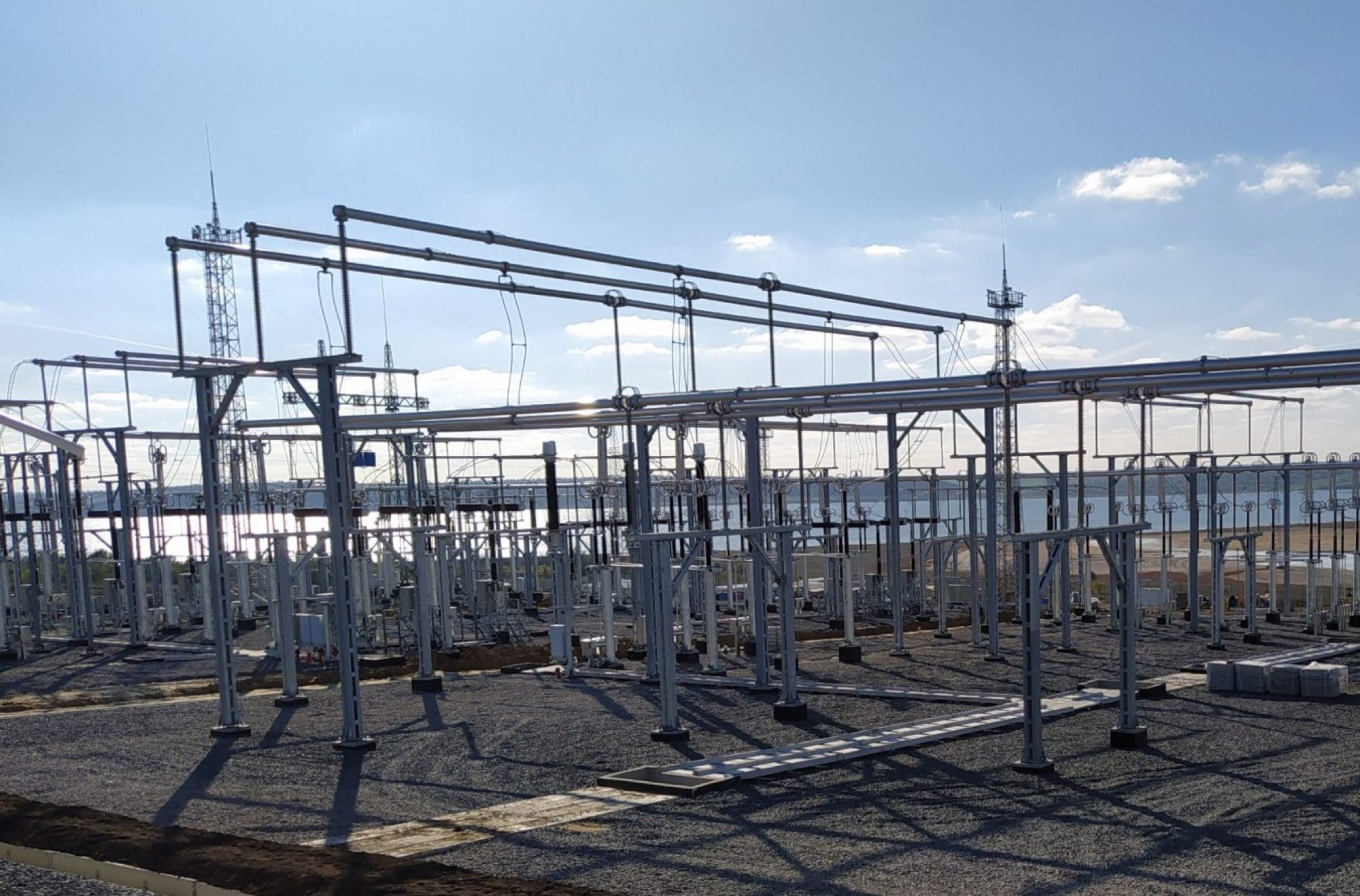
The Kwara 330/132/33 kV transmission substation, delivered by International Consolidated Contractors Offshore SAL for Nigeria's Rural Electrification Agency, connects three different voltage levels within one facility. Each voltage has a distinct purpose: 330 kV moves large quantities of electricity across long distances, 132 kV supports regional transmission, and 33 kV carries power closer to local distribution networks.
A substation does not create electricity. It changes the conditions under which electricity can move.
Power arrives at the Kwara transmission substation at a voltage suitable for long-distance transmission. It then passes through transformers, switchgear, protection systems and control equipment before leaving at lower voltage levels for use elsewhere in the network.
The facility was built to operate at 330 kV, 132 kV and 33 kV. Those numbers do not simply describe different pieces of equipment. They describe three different stages in the movement of electricity.
At 330 kV, the priority is transporting large amounts of power efficiently across the transmission network. At 132 kV, electricity can be moved through regional transmission connections. At 33 kV, power is brought closer to the voltage levels used by local distribution infrastructure and large consumers. The Kwara substation sits between those stages.
Why electricity is transmitted at 330 kV
Electricity must often travel long distances between generating stations, major grid nodes and areas of demand. Sending large amounts of power at a low voltage would require much higher current.
Higher current creates more heat in the conductors and increases the amount of electricity lost during transmission. Raising the voltage allows the same amount of power to be transferred with lower current. This reduces electrical losses and makes long-distance transmission more practical.
That is why the Kwara substation receives electricity at 330 kV, one of the principal voltage levels used within Nigeria's high-voltage transmission system.
At this level, the electricity is still intended for bulk movement. It is not yet in a form suitable for direct supply to neighbourhoods, businesses or most industrial facilities. The voltage must be reduced before the power can move deeper into the regional and local network.
What 330 kV means
A voltage level of 330 kV means there is a potential difference of approximately 330,000 volts between phases in the three-phase transmission system. Equipment operating at this voltage requires substantial insulation and physical clearance.
- Conductors must be kept far enough apart to prevent electrical arcing.
- Circuit breakers must be capable of interrupting fault current at high voltage.
- Busbars, disconnectors, instrument transformers and surge arresters must all be designed for the electrical stress of the system.
This explains why the 330 kV section of a transmission substation occupies so much physical space. The distance between equipment is not wasted land. It is part of the insulation system. Air itself helps separate live components, provided the required clearances are maintained.
How the Kwara substation receives 330 kV power
The Kwara project includes four 330 kV line bays. A line bay is the controlled point through which a transmission line connects to the substation. Each bay contains equipment used to switch, isolate, measure and protect the connection.
- Circuit breakers can interrupt current when a fault occurs.
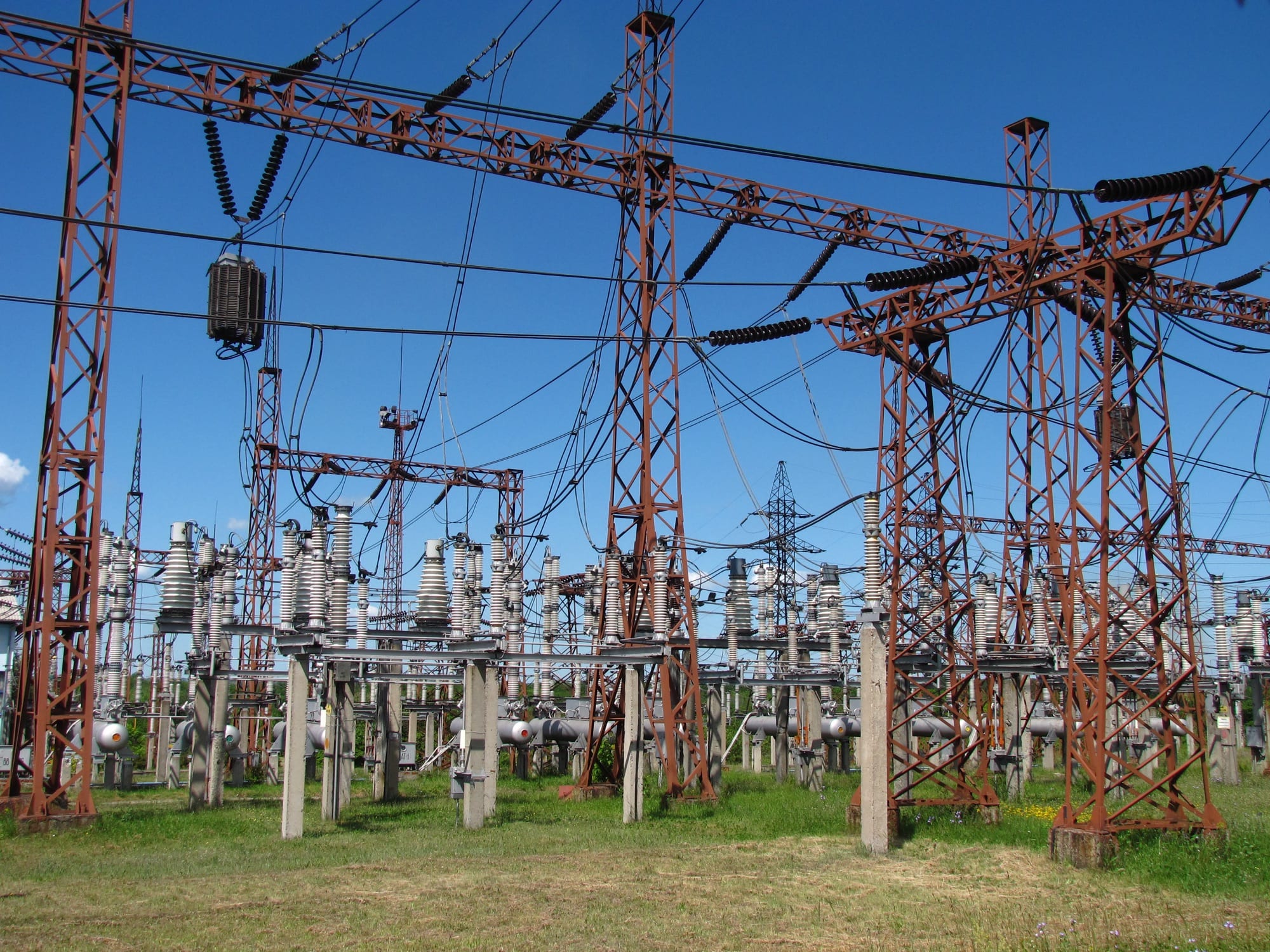
- Disconnectors provide visible isolation for maintenance.
- Current and voltage transformers supply measurements to protection relays, meters and the control system.
- Surge arresters help protect equipment from sudden increases in voltage.
The four line bays allow the substation to connect with multiple high-voltage circuits. Electricity entering through those connections can then be directed through the station's busbar system towards the transformers.
Why the voltage cannot stay at 330 kV
The main advantage of 330 kV is efficient bulk transmission. That same voltage is unsuitable for most regional and local networks.
The equipment required to handle it is large, expensive and physically demanding. The clearances are wide, the insulation requirements are high, and the safety considerations are significant. It would not be practical to carry 330 kV power directly into every community or local distribution area.
Instead, the voltage is reduced in stages. This is the role of the Kwara substation's two 150 MVA transformers. They receive high-voltage electricity from the 330 kV system and provide connections to the 132 kV and 33 kV levels.
“The voltage changes. The frequency remains the same. The electricity continues through the network, but under conditions better suited to the next stage of its journey.”
The role of the two 150 MVA transformers
Each main transformer at the Kwara substation is rated at 150 MVA. Together, the two units provide 300 MVA of installed transformation capacity.
The two-transformer arrangement creates two parallel transformation paths. This allows loading to be distributed between the units and gives operators more options during maintenance or equipment unavailability.
It does not mean one transformer can always replace the entire capacity of the other without restrictions. The remaining unit's rating, system demand, temperature, protection limits and wider network conditions still determine what can be carried safely. The value lies in flexibility: the substation does not depend on a single transformer for every voltage transition.
Why 132 kV is the middle stage
The 132 kV level sits between bulk transmission and lower-voltage distribution. It can move substantial amounts of electricity across a region while requiring less physical space and insulation than a 330 kV system.
At Kwara, 132 kV provides an intermediate network level. Electricity reduced from 330 kV can continue through regional transmission lines towards other substations and demand centres. This allows one high-capacity 330 kV connection to support a wider network of 132 kV routes.
The arrangement is similar to transport infrastructure. A major highway carries large volumes over long distances. Regional roads distribute those movements across a wider area. Local roads carry them closer to individual destinations. The comparison is not exact, but it explains why electricity networks use several voltage levels rather than one — each level is suited to a different distance, capacity and type of connection.
Why the network also needs 33 kV
The 33 kV level brings electricity another step closer to local use. It is commonly associated with sub-transmission and primary distribution networks that feed smaller substations, industrial facilities or groups of distribution feeders.
At 33 kV, the electricity can be carried across shorter distances before being reduced again to levels used by homes and ordinary businesses. The Kwara substation's 33 kV capability therefore allows the facility to support connections that do not require a full 132 kV interface.
This is important because not every destination needs the same amount of power. A major regional substation may require a 132 kV connection. A smaller network or large local consumer may be served at 33 kV. Providing both levels gives the substation more ways to direct electricity according to the needs of the connected system.
One facility, three different electrical environments
Although the three voltage levels form one substation, they cannot be treated as identical systems. Each requires its own equipment ratings, clearances, insulation and protection arrangements.
The 330 kV side needs the largest physical separation between live components. The 132 kV section can be more compact but still operates as high-voltage transmission infrastructure. The 33 kV system uses equipment designed for lower electrical stress and closer connections to local networks.
Transformers create the electrical connection between these environments. Protection systems monitor each side. Switchgear determines which lines and equipment are connected. Metering records what is flowing through the facility. The automation system brings information from all three levels into one operating view.
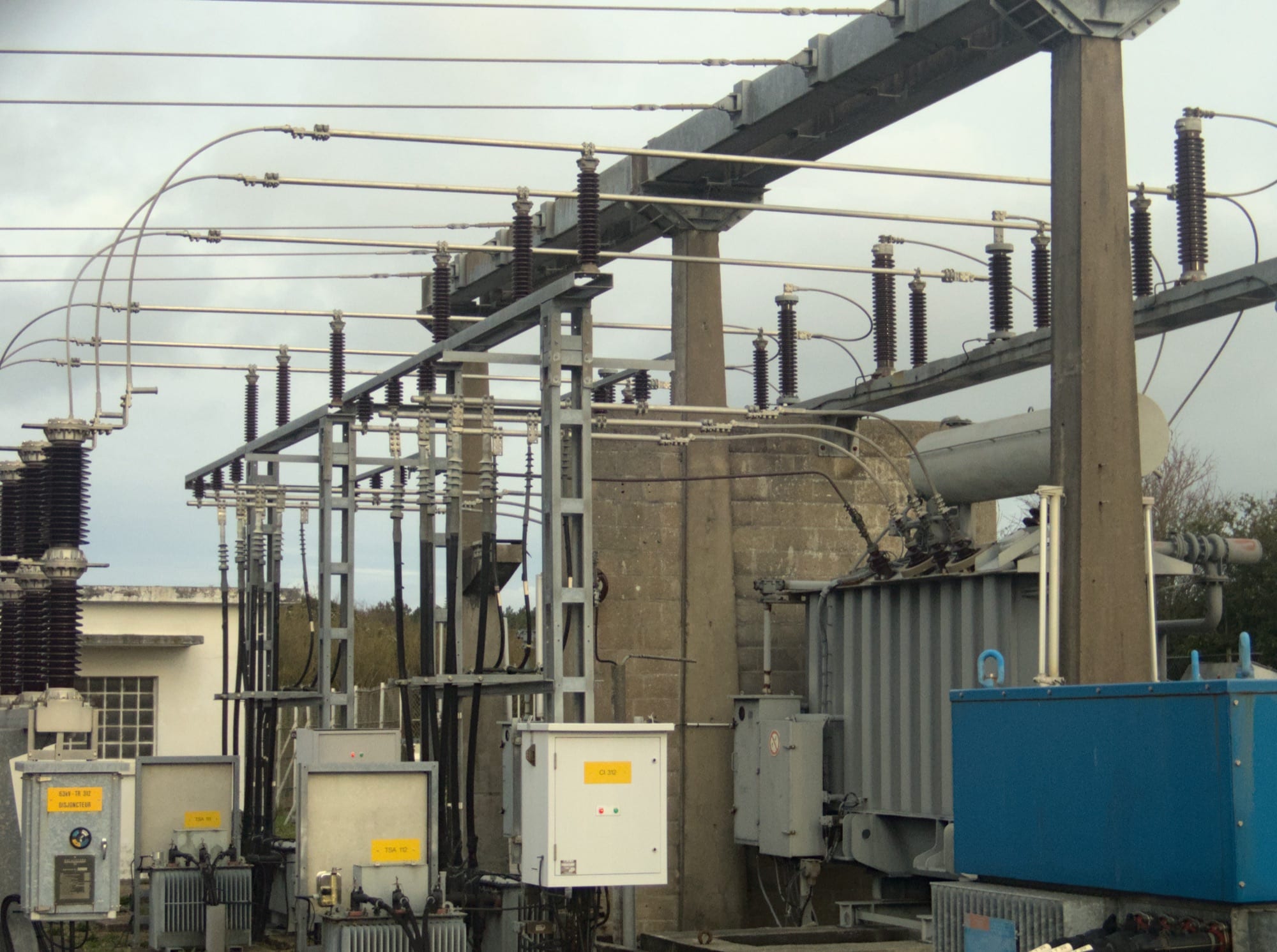
How power moves through the Kwara substation
A simplified power path through the facility runs in four steps.
- 330 kV transmission line — power enters through one of the high-voltage line bays.
- 330 kV busbar — a common connection between the incoming lines, transformers and other high-voltage equipment.
- 150 MVA transformer — the voltage is reduced as power transfers between the connected systems.
- 132 kV or 33 kV network — electricity leaves at a voltage suited to the next part of the grid.
The actual operating arrangement may vary according to which lines, transformers and downstream connections are available. But the principle remains the same: the substation receives electricity in bulk and redistributes it at lower voltage levels.
Why voltage reduction happens in stages
It may seem simpler to reduce electricity directly from 330 kV to the voltage used in homes. In practice, electricity networks are too large and varied for one transformation step to serve every purpose efficiently.
A single neighbourhood requires far less power than a city, industrial zone or regional transmission corridor. If every local area connected directly to 330 kV, each would require extremely large and costly high-voltage infrastructure.
The network instead uses a hierarchy. Power is transmitted at high voltage. Regional substations reduce it to intermediate levels. Distribution substations reduce it further. Local transformers then bring it down to the voltage supplied to individual customers. This staged approach allows equipment to be sized more appropriately at each point, and allows network operators to direct power through different routes and serve different categories of demand.
What happens to current when voltage changes
Transformers change the relationship between voltage and current. When voltage is reduced, current generally increases for the same transferred power, allowing for losses and system conditions. This is why lower-voltage networks require conductors and equipment suited to higher current at their level of power transfer.
The transformer does not create additional electrical energy. It converts the voltage-current relationship so the electricity can be moved and used under different conditions. At 330 kV, relatively lower current can carry large power over long distances. At 132 kV and 33 kV, higher current supports regional and local delivery over shorter distances. Each stage is chosen to balance efficiency, equipment size, safety and cost.
The protection system must understand every voltage level
A fault on the 330 kV side is not handled in exactly the same way as a fault on a 33 kV connection. Equipment ratings differ. Fault-current levels may differ. Protection zones are defined around specific lines, transformers, busbars and feeders.
The Kwara substation therefore requires coordinated protection across all three voltage levels. Current and voltage transformers provide measurements from the different sections. Protection relays analyse those measurements. When a fault is detected, the appropriate circuit breaker is instructed to open.
The objective is to isolate the affected part without unnecessarily disconnecting healthy sections of the facility. Transformer protection must also recognise faults inside or around the units connecting the voltage levels. The protection system therefore follows the same hierarchy as the electrical network: it understands where electricity entered, how it was transformed and which side of the facility is affected.
Voltage control at the 330 kV level
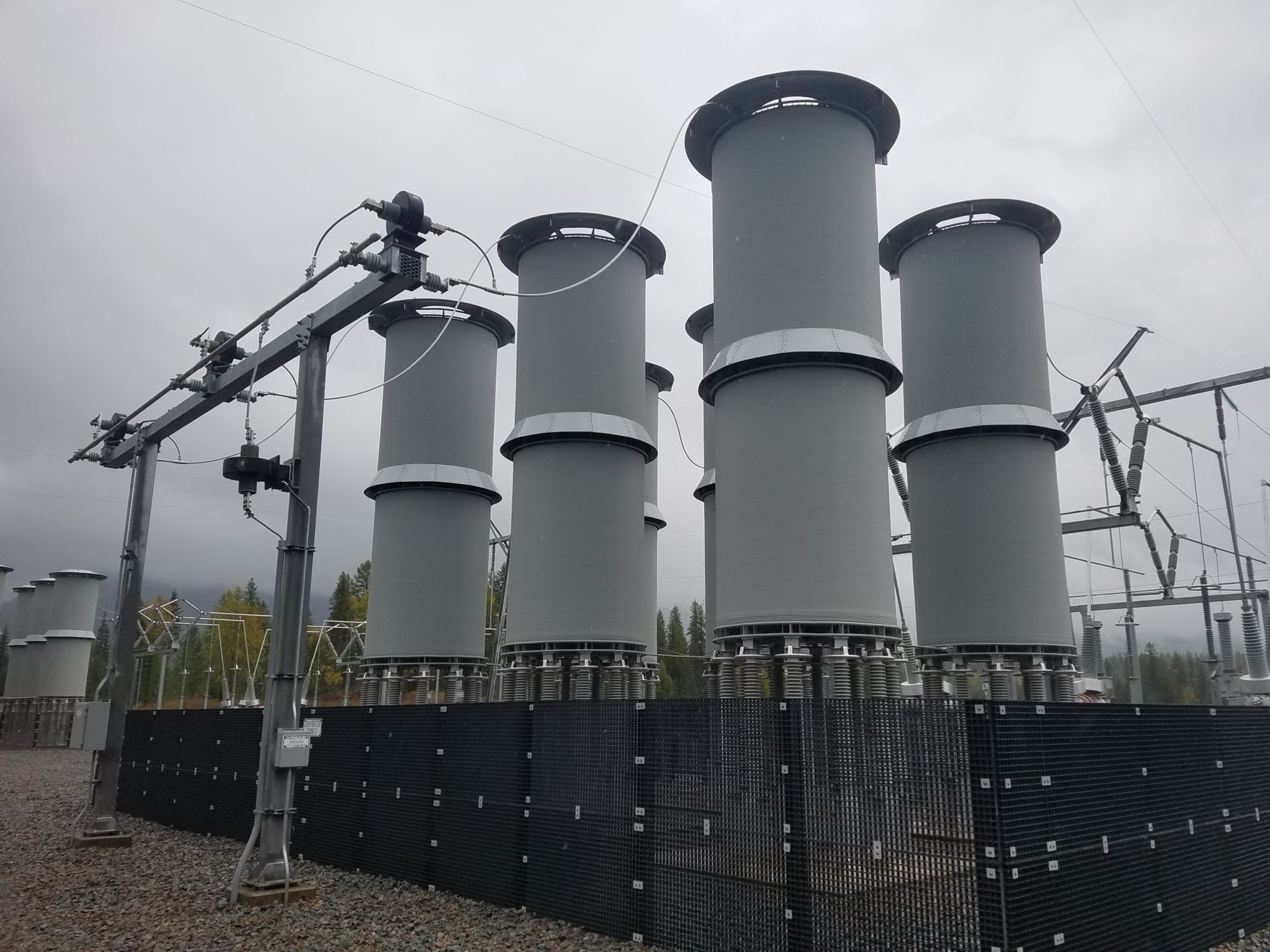
Changing voltage through transformers is only one part of voltage management. The Kwara substation also includes a variable 330 kV line reactor rated between 25 and 62 MVAr.
Long high-voltage transmission lines can produce excess reactive power, particularly when lightly loaded. This can cause voltage to rise beyond the desired operating range. The reactor absorbs reactive power and helps stabilise voltage on the connected 330 kV system.
Because the unit is variable, its response can be adjusted as network conditions change. This allows the high-voltage side of the substation to remain within acceptable operating limits before power is transformed and passed to the lower-voltage networks.
Operators need one view of all three systems
The substation's different voltage levels are brought together through its automation and control systems. SCADA allows operators to monitor:
- line and transformer loading;
- voltage and current measurements;
- circuit-breaker positions;
- disconnector status;
- alarms;
- reactor conditions;
- protection-system activity;
- auxiliary-system status.
Without this shared view, the facility would be difficult to operate as one coordinated site. An event at 330 kV may affect transformer loading at 132 kV. A transformer being removed from service may change what is available at 33 kV. A downstream fault may alter power flow through the higher-voltage system. The control system allows operators to see these relationships rather than treating each voltage level as a separate station.
ICCO's role in the Kwara project
International Consolidated Contractors Offshore SAL delivered the engineering, procurement, construction, installation, testing and commissioning of the Kwara 330/132/33 kV transmission substation. The scope brought together:
- two 150 MVA power transformers;
- four 330 kV line bays;
- two 330 kV transformer bays;
- a variable line reactor;
- high-voltage switchgear;
- protection and control systems;
- metering and telecommunications;
- Substation Automation and SCADA;
- auxiliary AC and DC systems;
- civil and structural infrastructure.
The project required equipment at three voltage levels to function as one facility. The transformers had to connect correctly with the switchyards. The protection settings had to distinguish between faults on different sides. SCADA had to display accurate information from across the site. Commissioning had to verify not only individual equipment, but the complete path through which electricity would enter, change voltage and leave.
The Kwara project at a glance
- Kwara 330/132/33 kV transmission substation
- Kwara State, Nigeria
- Rural Electrification Agency (REA)
- International Consolidated Contractors Offshore SAL (ICCO)
- 330 kV, 132 kV and 33 kV
- Two 150 MVA power transformers — 300 MVA installed
- Four line bays; two transformer bays
- Variable, 25–62 MVAr
- Engineering, procurement, construction, installation, testing and commissioning
- 23 January 2025
Why Kwara needs all three voltage levels
The Kwara substation uses 330 kV, 132 kV and 33 kV because no single voltage level can efficiently perform every role in the electricity network. The 330 kV system carries bulk power over long distances. The 132 kV system distributes that power across the regional transmission network. The 33 kV system brings it closer to local distribution and large users.
The transformers connect those layers. The switchgear controls them. The protection system keeps faults from spreading between them. The control system allows operators to see them as one facility.
“The three voltage levels are not competing systems. They are successive stages of the same journey. Electricity arrives in Kwara prepared for distance. It leaves prepared for destination.”
Three things to know
- 330 kV moves large quantities of power over long distances: raising voltage lowers current, and lower current means less energy lost as heat in the conductors.
- Two 150 MVA transformers — 300 MVA of installed capacity — connect the 330 kV system to the 132 kV and 33 kV networks, giving two parallel transformation paths rather than one.
- A variable 25–62 MVAr line reactor absorbs the reactive power a lightly loaded 330 kV line produces, holding voltage inside its operating range.
Sources
- Equipment scope — two 150 MVA transformers, four 330 kV line bays, two 330 kV transformer bays and a variable 25–62 MVAr line reactor — as published by International Consolidated Contractors Offshore SAL, the contractor that delivered the substation.
- The Kwara substation was procured by Nigeria's Rural Electrification Agency.
Photography
- A 330 kV outdoor switchyard at Prohresivka, Ukraine. The wide spacing between live components is not spare land — at this voltage the air itself is part of the insulation. — Владимир Рар / Wikimedia Commons (CC BY-SA 4.0)
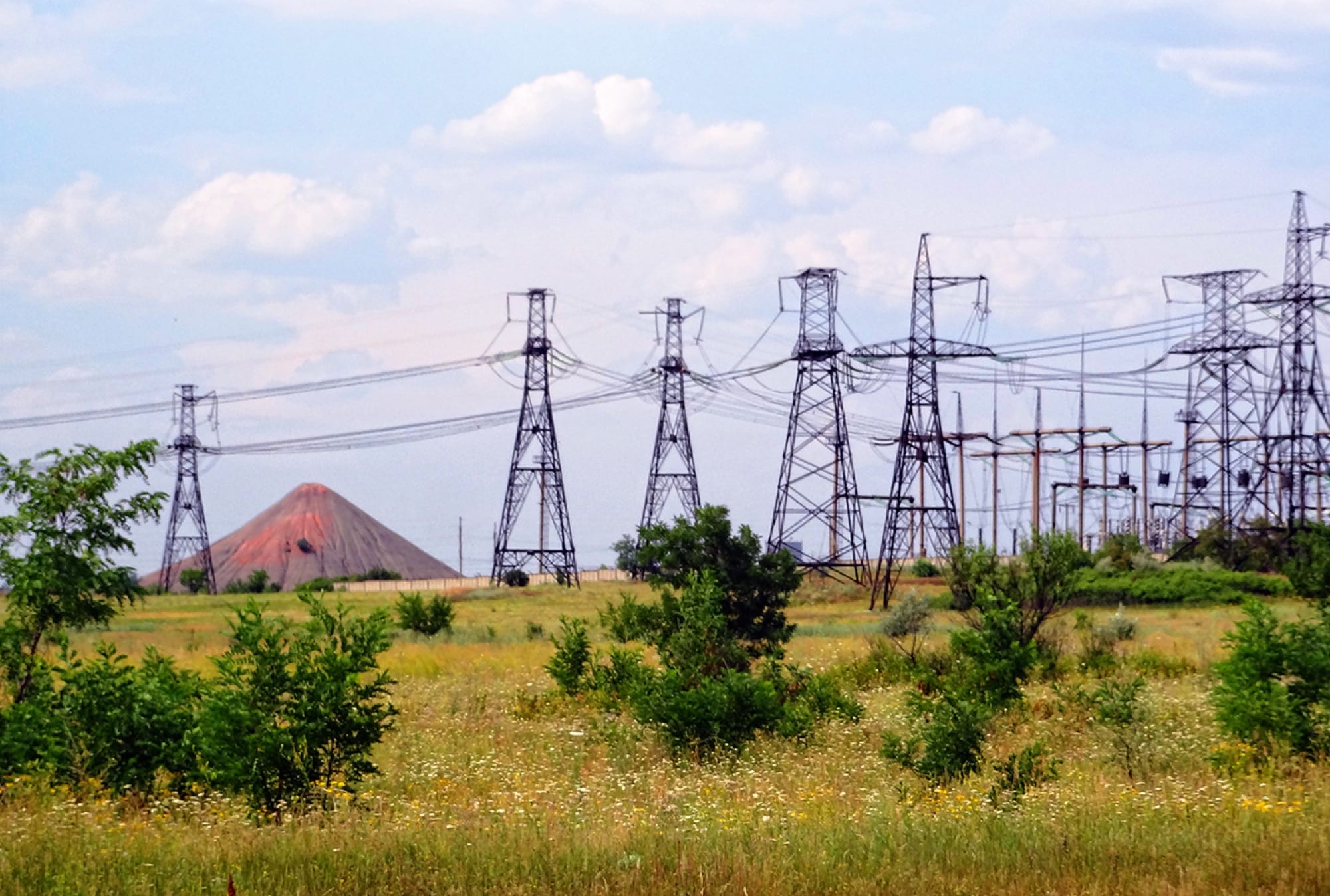
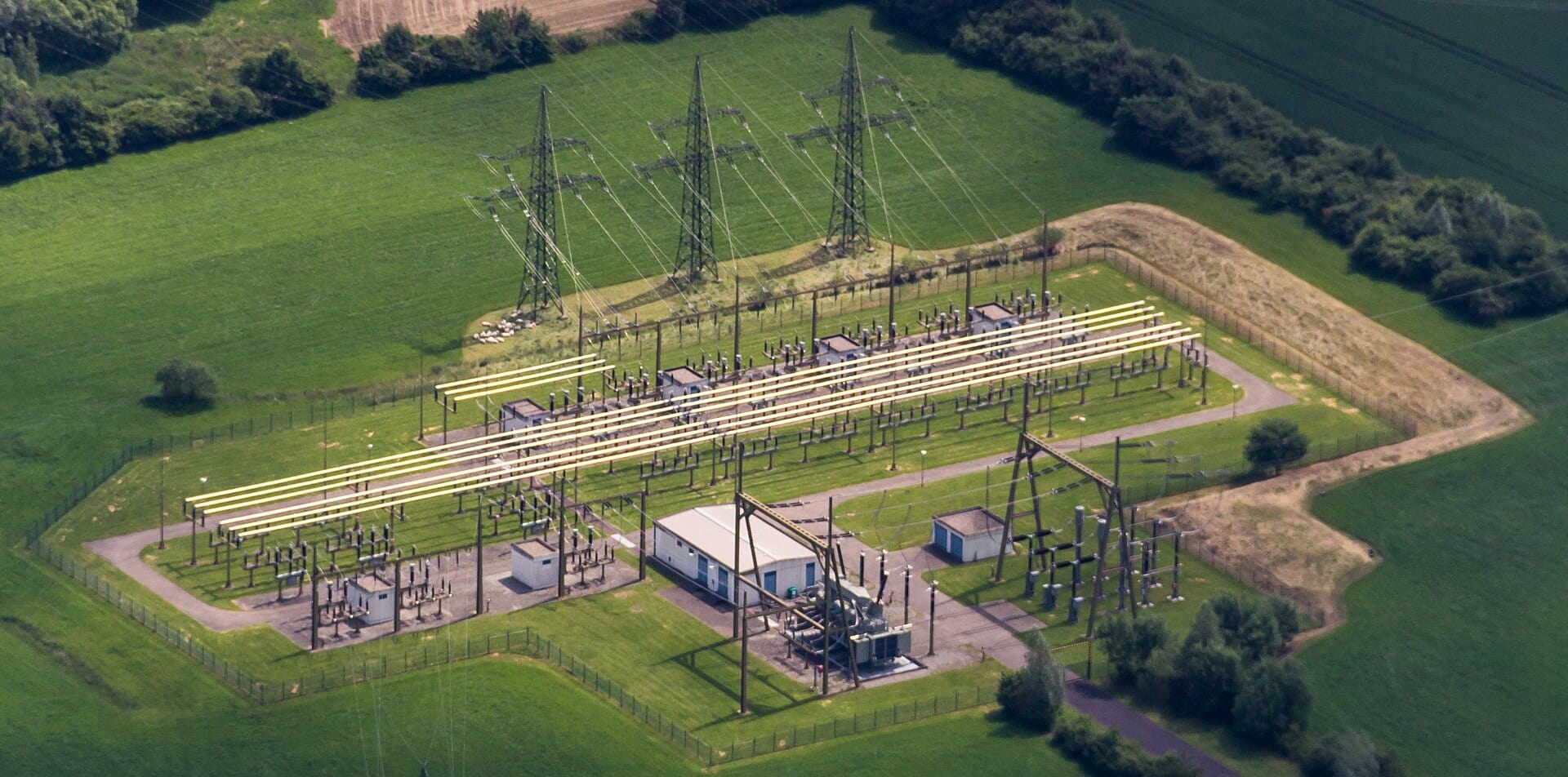
- The Tsentralna 330 kV substation in Pokrovskyi Raion, Ukraine. Busbars run the length of the yard, giving incoming lines and transformers a common point of connection. — Валерий Дед / Wikimedia Commons (CC BY 3.0)
- High-voltage switchgear. Disconnectors give the visible isolation a maintenance crew needs before work can begin on a circuit. — Novoklimov / Wikimedia Commons (CC BY 4.0)
- A power transformer, photographed in Italy, with its cooling radiators and high-voltage bushings. The radiators are there because everything a transformer loses, it loses as heat. — Sonia Budini / Wikimedia Commons (CC BY-SA 4.0)
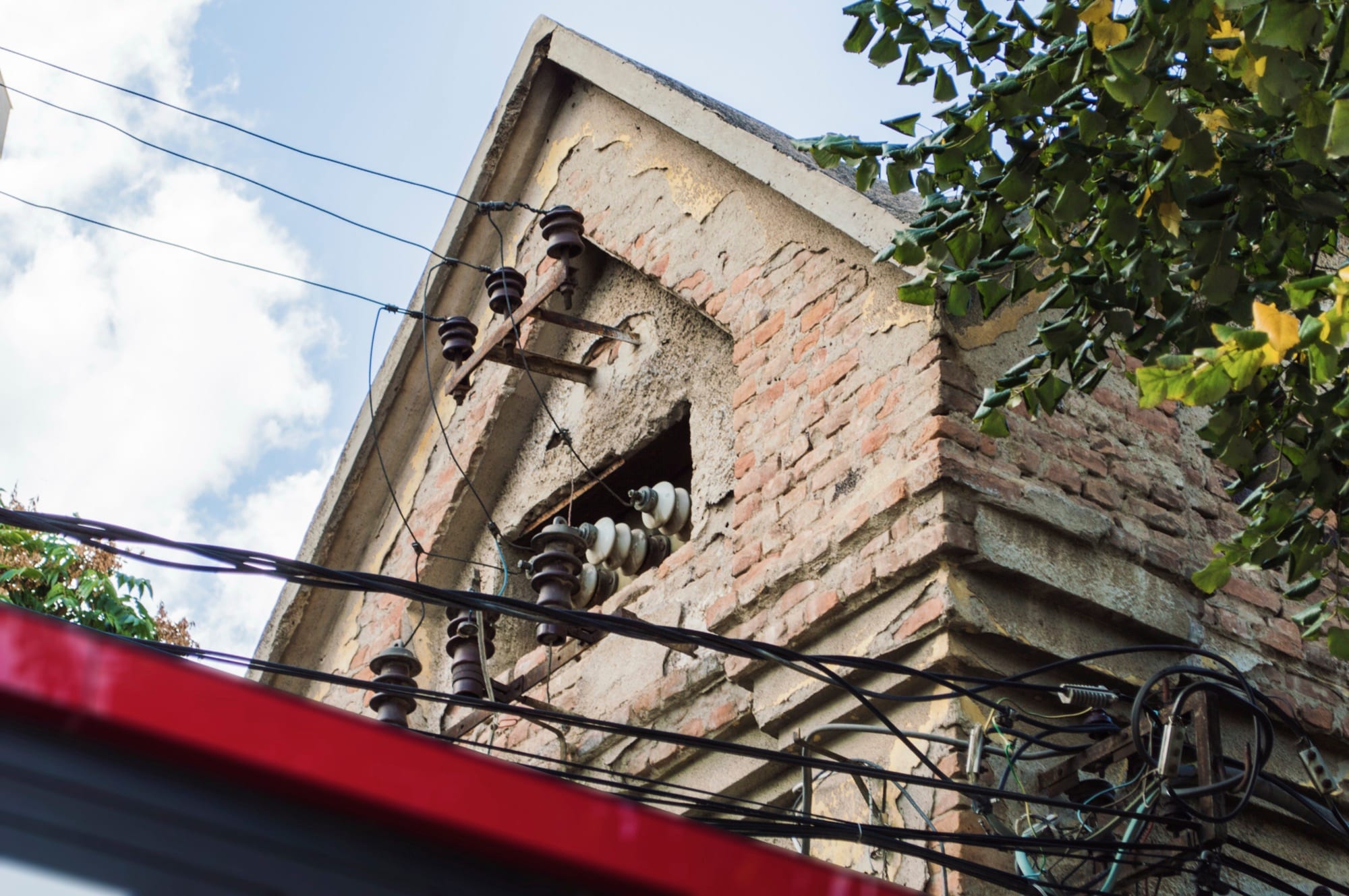
- Higher- and lower-voltage lines meeting at one transformer, at Pont-l'Abbé in France. The voltage changes across the unit; the frequency does not. — PtiBzh / Wikimedia Commons (CC0)
- VARsity / Wikimedia Commons (CC BY-SA 4.0)
The reporter
The Courtyard's infrastructure desk covers power, transmission and the projects reshaping how electricity reaches Nigerian towns. We report on the contractors and agencies doing the work; we are not commissioned by them.
Read next


Send a letter to the editor
We do not run open comments. We do read letters, and we publish a selection of them each Sunday with the writer’s name and town. If you know something about this story that we got wrong, or missed, we would like to hear it.